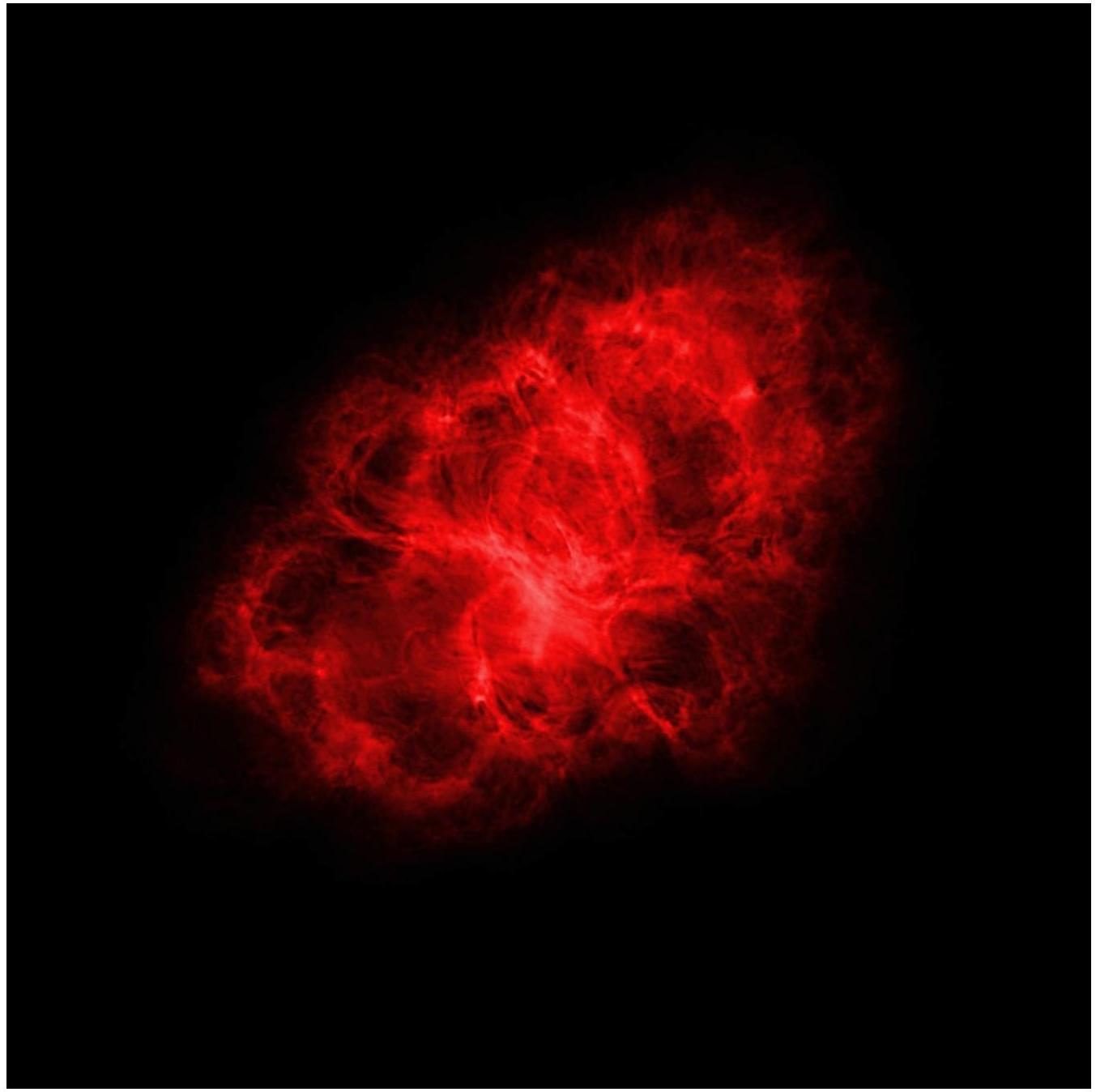
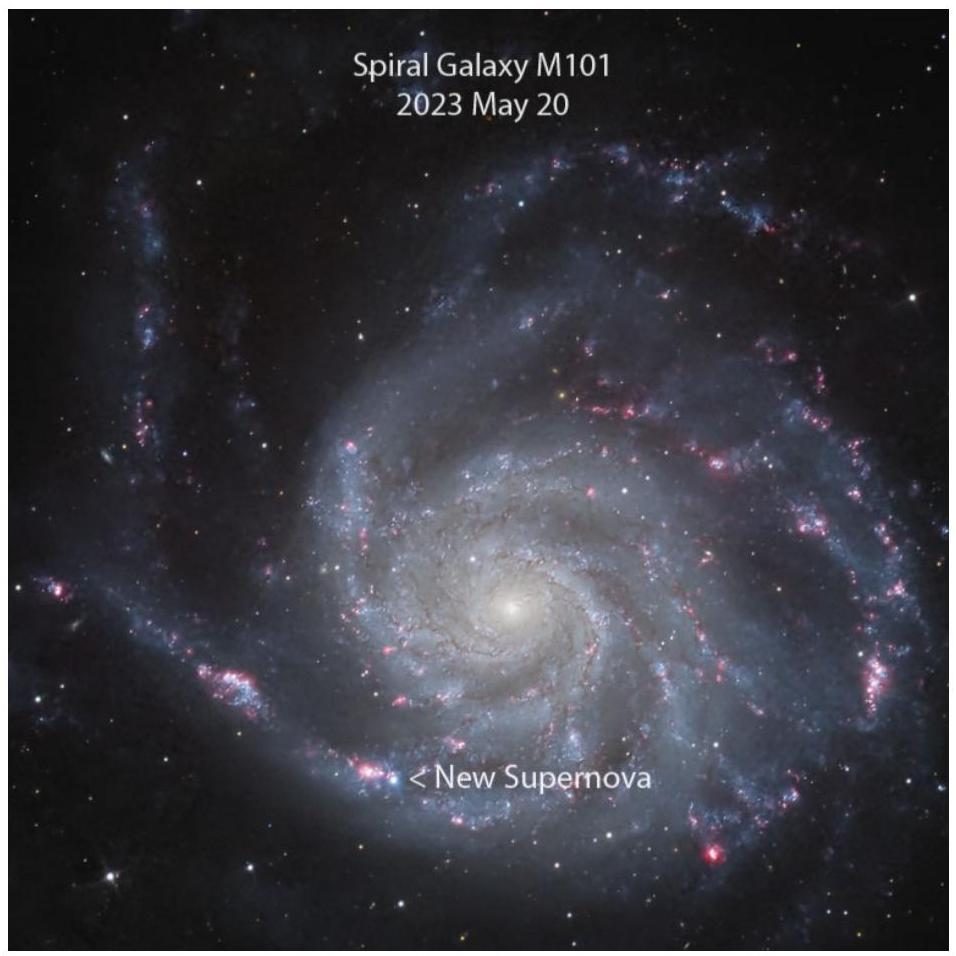
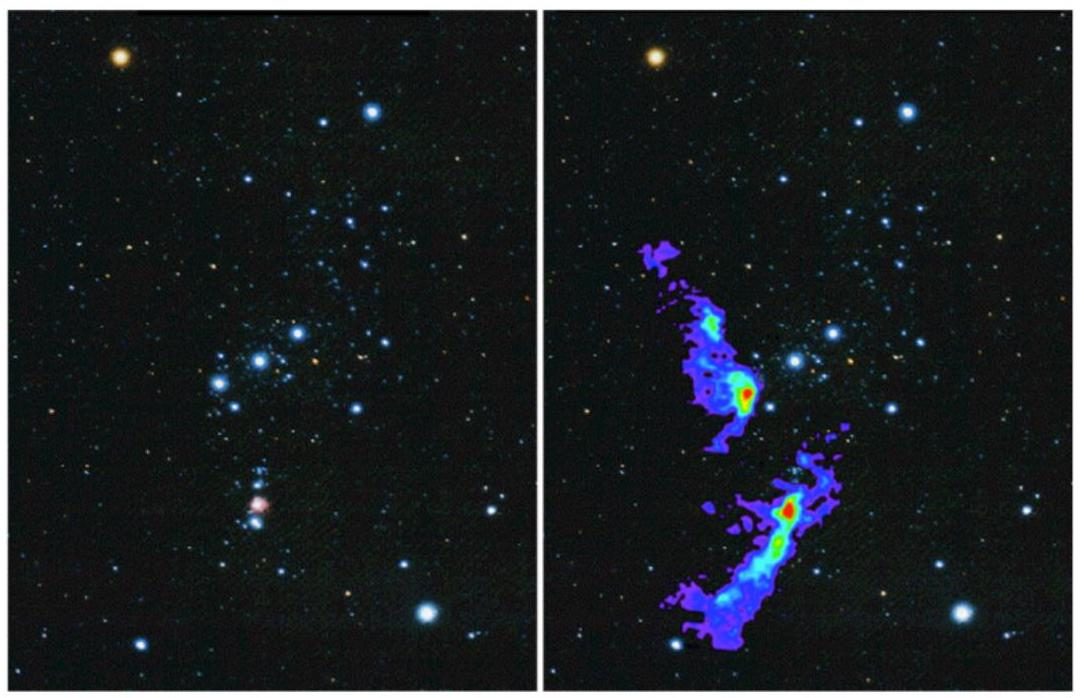
Star formation begins when dense clumps within giant molecular clouds, called diffuse nebulae, begin to collapse as their gravity exceeds the pressure from the temperature of the gas. For much of the collapse the clump remains transparent and so can radiate away the energy of the collapse. Consequently the clump stays at a very constant temperature (until a protostar begins to form at the core, when the temperature does rise rapidly as the gas becomes opaque), and so this part of the collapse happens essentially in freefall. This means it can happen rather fast (by astronomical timescales!).
Consider one of the very dense clumps within a nebula. Assume it is spherical with an initial radius of $r_0$, and begins to collapse at time $t=0$, until it has shrunk to radius $r$ by some time $t$ later. If the initial density of this clump, $\rho_0$, is uniform everywhere in the sphere (called a homologous collapse) then we can describe its collapse with the following formulae:
$$\theta + \frac{1}{2}\sin 2\theta = \left(\frac{8\pi G\rho_0}{3}\right)^{1/2} t \quad \text{where} \quad \frac{r}{r_0} = \cos^2\theta$$
(a) The duration of the freefall is $t_{\mathrm{ff}}$, and by the end of that part of the collapse $r \ll r_0$. Using the above equations derive an expression for $t_{\mathrm{ff}}$ in its simplest form. What do you notice about your formula? [Note: $\theta$ is in radians]
(b) If the density of the clump is $5.0 \times 10^{-16} \mathrm{~kg~m^{-3}}$, calculate a value for $t_{\mathrm{ff}}$. Give your answer in years.
(c) Draw what you expect a graph of $r$ against $t$ to look like.
Show answer · 显示答案
- (a)$t_{ff} = \sqrt{\frac{3\pi}{32 G \rho_0}}$
- (b)$t_{ff} = 9.42 \times 10^4 \text{ years}$
- (c)See the book for the worked solution.
Full worked solutions: BAAO Astro Challenge: Complete Solutions (book)